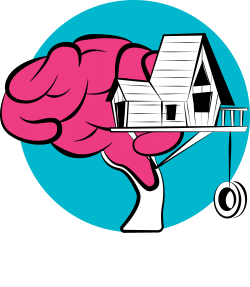

I spent two days at Learning Live recently, surrounded by conversations about learning, development and how we help people grow. There were discussions about AI, technology, leadership, culture, skills and what learning might look like in the future. Somewhere amongst all of that, I found myself thinking about something surprisingly simple.
Most of us already know an awful lot about what we should be doing.
We know we should listen properly rather than wait for our turn to speak. We know we should pause before reacting when something annoys us. We know sleep matters, movement is good for us and endlessly scrolling through our phones probably isn’t the best use of an evening. We know we should ask more questions, make time to think, have the difficult conversation rather than avoid it and stop worrying quite so much about things we can’t control.
And yet, despite knowing all of this, we remain wonderfully capable of doing exactly the opposite. If knowing was enough, we’d all be brilliant at everything.
I think there’s something fascinating about the gap between knowing something and actually doing it. We tend to assume that once we understand something, change should naturally follow. If I know I interrupt people too often, surely I can just stop interrupting. If I know I become defensive when someone challenges me, I can simply decide to respond differently next time. If I know a particular habit isn’t helping me, then knowing that should be enough to change it.
Except human beings don’t really work like that.
Think about how often you’ve had a moment of genuine insight about yourself. Maybe someone gave you feedback that really landed, you read something that made you see a situation differently, or you left a conversation completely convinced you were going to approach something differently from now on. In that moment, it feels significant. Sometimes it even feels as though the change has already happened simply because we can suddenly see it.
Then real life returns.
The meeting gets tense, the deadline gets closer, somebody presses exactly the wrong button and, before we know it, we’re back in the familiar pattern. Not because the insight wasn’t real or because we didn’t mean what we said, but because understanding a behaviour and changing a behaviour are two different things.
It may be why so much personal and professional development can feel deceptively straightforward in theory. Most of the ideas that genuinely improve the way we work with other people aren’t particularly complicated. Listen. Stay curious. Ask rather than assume. Give useful feedback. Be open to challenge. Notice your impact. Make space for other voices. Reflect before you react.
None of that is especially difficult to understand. Doing it consistently, particularly when we’re tired, busy, under pressure or emotionally invested, is another matter entirely.
It makes me wonder whether we sometimes put too much emphasis on the moment somebody learns something and not enough on what happens afterwards. We attend the workshop, read the book, listen to the podcast or have the conversation and come away with a new idea. There’s a little burst of motivation that comes with it. Yes. That makes sense. I’m going to do that.
The real test arrives three weeks later, when nobody is reminding us of the thing we learned and the old response is quicker, easier and much more familiar.
That’s where learning becomes behaviour.
There’s an interesting connection here with something I wrote about recently. In Who Are You When You’re Not Looking?, I explored the parts of ourselves that other people can sometimes see more clearly than we can. The assumption underneath much of our thinking about self-awareness is that once we can see something about ourselves, we can change it.
I’m not sure it’s quite that simple.
Seeing the pattern matters enormously, but it’s only the beginning. We can recognise that we need to listen more and still interrupt. We can understand that we need better boundaries and still say yes. We can know that a particular reaction isn’t helpful and still feel it arriving before we’ve had time to choose another one.
This is reassuring because it means repeating an old behaviour doesn’t necessarily mean we’ve learned nothing. Sometimes change is happening in much smaller increments. We notice the behaviour sooner. We catch ourselves halfway through. We apologise more quickly. Eventually, perhaps, we pause before doing it at all.
The gap between knowing and doing starts to get a little smaller.
That thought stayed with me after Learning Live because so many of the conversations we had were ultimately about change. Organisations want people to adapt, collaborate, communicate differently, lead differently and respond well to uncertainty. Learning and development clearly has an important role in all of that, but giving people more information can only ever be part of the answer.
Sometimes people already know.
The challenge is creating enough opportunity to practise, reflect, get things wrong, receive feedback and try again until the new behaviour becomes more natural than the old one. That takes longer than a moment of insight, and it’s much less tidy than completing a course or attending a workshop, but perhaps that’s what genuine development has always looked like.
And, of course, this isn’t just about work. The same thing happens in our relationships, our habits and the promises we repeatedly make to ourselves. We know what we want to do differently. We can often explain exactly why it would be better for us. Then we discover, once again, that knowing and doing are separated by a surprisingly stubborn little gap.
Maybe we’re too hard on ourselves about that sometimes.
Change is rarely one dramatic moment where the old behaviour disappears and the new one takes its place. More often, it seems to happen through noticing, trying, forgetting, catching ourselves, trying again and gradually getting a little better at choosing differently.
So perhaps the question after learning something new shouldn’t always be, “What do I know now that I didn’t know before?”
Perhaps the more interesting question is, “What will I actually do differently because I know it?”
Knowing is not the same thing as changing.